
Automotive PCB: Everything You Need to Know About it
Perhaps you know the usage of printed circuit boards in TVs, cameras, smartphones, and computers. Well, there are several sectors that rely heavily on PCBs. Among them, one is – automotive.
A printed circuit board used in the automotive industry is known as an automotive PCB. After all, PCB manufacturers specifically design it for vehicles. These circuit boards have a significant role in enhancing the safety and performance of automobiles.
This post provides you with comprehensive information on automotive PCBs, their types, and applications. Let us begin this without any further delay.
What are Automotive PCBs?
An automotive PCB is a unique printed circuit board used in various types of vehicles. It has a critical role in automotive technology.
Automobile companies use it for various automotive electronics. You can notice its usage in anti-lock brake systems, digital displays, GPS, airbag controls, and more.
It would not be wrong to mention that these circuits are transforming the automotive sector. They are making vehicles more safe and reliable.
If you see the automotive PCB design, you will notice how different it is from regular PCBs.
Since the automobile sector has distinct requirements, Automotive PCBs are unlike the standard PCBs.Let’s find out how they are different from standard PCBs.
How Automotive PCBs Differ from Standard PCBs
Both PCB types are different in terms of the following aspects.
Material
Unlike standard printed circuit boards, automotive PCBs contain two or more prefabricated materials. It makes them withstand high humidity and temperature. Generally, these materials include flame-retardant fiberglass epoxy laminate and ceramic-filled PTFE.
Thickness
Most standard PCBs have a thickness between 0.2 and 3.0mm. On the contrary, the thickness of automotive PCB boards ranges from 0.6 mm to 3.2mm, depending on the requirements.
Copper Foils
Generally, an automotive PCB uses thicker copper for its inner and outer layers. It helps the PCB bear electrical vibrations. Moreover, thicker copper foil ensures better current pass.
Adhesive Material
Regular printed circuit boards use standard adhesive material. However, automotive PCBs use adhesive materials like epoxy resins, polyimides, acrylic, and sometimes silicone adhesives. They protect PCBs against vibrations and high temperatures.
Evolution of Automotive PCB Technology
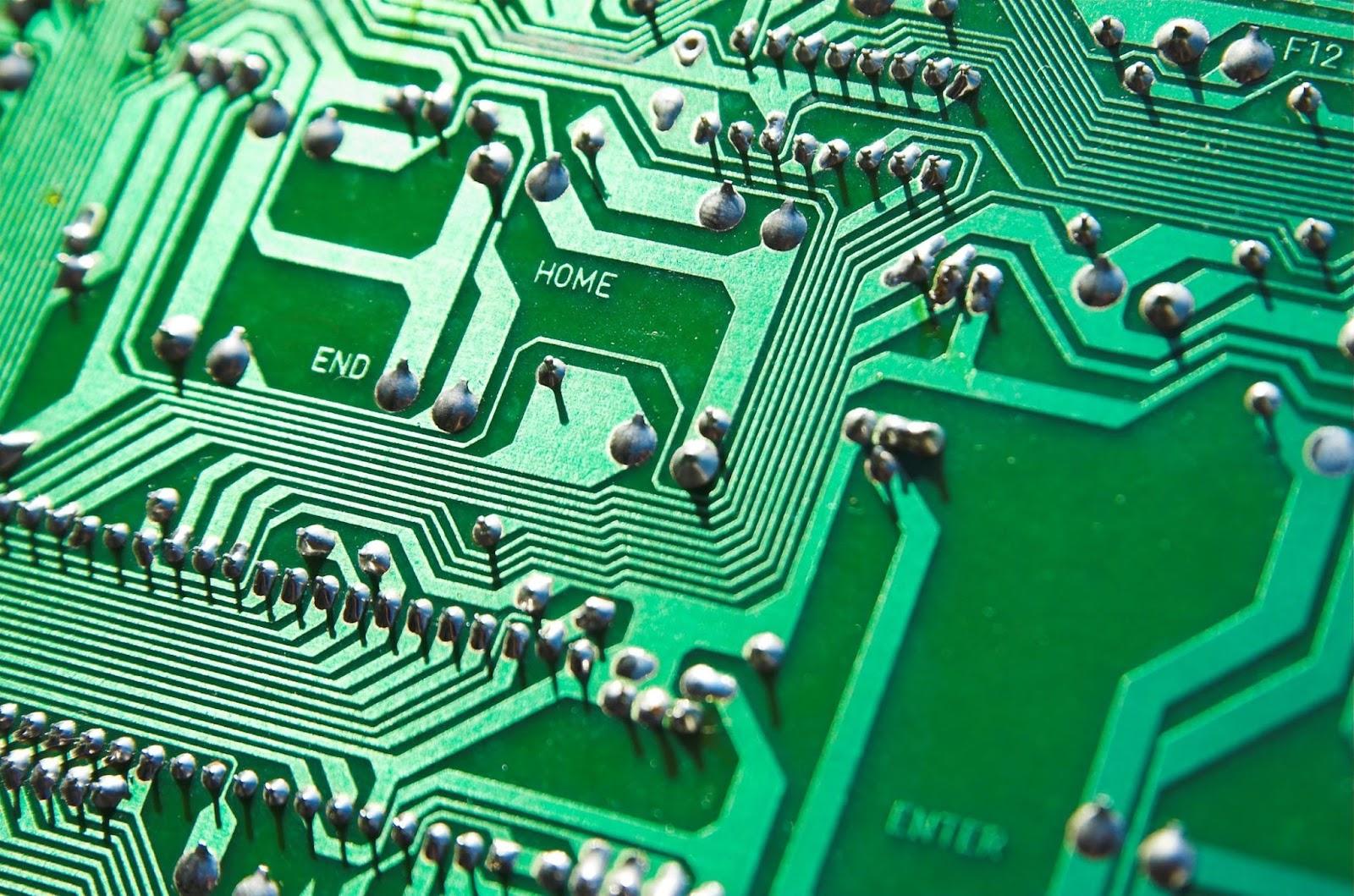
Printed circuit boards dates back to the early 20th century. Albert Hanson was the person who filed a patent for a flat conductor laminated insulating board.
Until 1943, the actual printed circuit board was not manufactured and used. The US Army used it for the first time during World War 2. They used it to make proximity fuses.
Gradually, different industries started adopting this technology. Today, from toys to fighter planes, PCBs are everywhere.
In the automotive industry, PCB Technology is achieving new milestones every year. If you observe, automotive PCBs are transforming vehicle electronics.
Automobile companies had started using PCBs in the mid-20th century. They came as an alternative to complex electrical connections. These circuits simplified the merging of wiring and components.
Today, they are more than that. Nowadays, Automotive PCB is improving vehicle safety and performance.
The future outlook of automotive PCBs seems promising. In the upcoming years, you may see AI integration in automotive PCBs. They can be programmed to make real-time decisions to enhance the safety of vehicles.
Electric vehicle manufacturers may also use them to support fast charging.